


EnergyPlus online? Building energy simulation without the desktop
In short: Running EnergyPlus online means using the same validated US Department of Energy simulation engine through a browser, with the model-building automated. Benchmarked against a detailed hand-built model of a Bergamo clinic, the cloud approach landed within 4.8% on heating and 14.0% on cooling, inside the 20% margin accepted for early-stage design (Picco and Marengo, 2019).

Designing for a climate that doesn’t exist yet
In short: UK buildings are designed against historical weather, but they will operate into the 2070s in a climate the record does not yet contain. Research projects heating demand falling up to 21% by 2080 while cooling demand rises sharply making climate resilient building design a present-day requirement, not a future one (Viganò et al., 2024).

Will your net-zero building still be net-zero in 2080?
In short: A net-zero building certified today is judged against today’s weather but it will operate into the 2080s. When researchers stress-tested a UK net-zero home against 2080 climate files, it held: no significant overheating in any scenario and roughly 89% lower emissions than a conventional design, albeit with the necessity of a cooling system. The resilience was a finding, not a guarantee of the label which is what net zero building design software must be able to verify (Viganò et al., 2024).

Retrofitting comfort into a Victorian hall
In short: Thermal comfort simulation models how a space actually feels air and radiant temperature together, not just how much energy it uses. In a listed Victorian hall, it showed infrared panels were the simplest heritage-friendly retrofit, but heat pumps delivered far lower carbon and running cost over the building’s life. Only a holistic appraisal surfaces that trade-off (Rugani, Picco and Fantozzi, 2024).

How to choose the best building energy simulation software in 2026
In short: The best building energy simulation software is not a single product, it is the right class of tool for your design stage, on a validated engine, with a published benchmark. Detailed environments (DesignBuilder, IES VE) suit technical design; cloud screening tools (FREDS, benchmarked within 20% on heating and cooling against a detailed EnergyPlus model) suit concept stage; compliance calculators suit certification (Picco and Marengo, 2019).
When better insulation isn’t the better investment
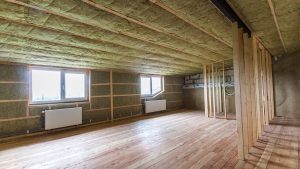
In short: A building retrofit assessment tool is only as honest as the costs it counts. For an office retrofit, counting heating alone favours mineral wool (6.4-year payback) and rules out vacuum insulated panels. Counting the floor space VIPs saves you space; up to 89.67 m² in our case study, worth about £90,000 a year in London rent and VIPs pay back in as little as 1.3 years. Count embodied carbon and mineral wool wins again (Alam, Picco and Resalati, 2022).
